
Thursday, November 8, 2012

New horned dinosaur was found.
Scientists have named a new species of horned dinosaur (ceratopsian) from Alberta, Canada. Xenoceratops foremostensis (Zee-NO-Sare-ah-tops) was identified from fossils originally collected in 1958. Approximately 20 feet long and weighing more than 2 tons, the newly identified plant-eating dinosaur represents the oldest known large-bodied horned dinosaur from Canada.
 Research describing the new species is published in the October 2012 issue of the Canadian Journal of Earth Sciences.
"Starting 80 million years ago, the large-bodied horned dinosaurs in North America underwent an evolutionary explosion," said lead author Dr. Michael Ryan, curator of vertebrate paleontology at The Cleveland Museum of Natural History. "Xenoceratops shows us that even the geologically oldest ceratopsids had massive spikes on their head shields and that their cranial ornamentation would only become more elaborate as new species evolved."
Xenoceratops (Xeno + ceratops) means "alien horned-face," referring to the strange pattern of horns on its head and the scarcity of horned dinosaur fossils from this part of the fossil record. It also honors the Village of Foremost, located close to where the dinosaur was discovered.Xenoceratops had a parrot-like beak with two long brow horns above its eyes. A large frill protruded from the back of its skull featuring two huge spikes.
"Xenoceratops provides new information on the early evolution of ceratopsids, the group of large-bodied horned dinosaurs that includes Triceratops," said co-author Dr. David Evans of the Royal Ontario Museum and University of Toronto. "The early fossil record of ceratopsids remains scant, and this discovery highlights just how much more there is to learn about the origin of this diverse group."
The new dinosaur is described from skull fragments from at least three individuals from the Foremost Formation originally collected by Dr. Wann Langston Jr. in the 1950s, and is currently housed in the Canadian Museum of Nature in Ottawa, Canada. Ryan and Evans stumbled upon the undescribed material more than a decade ago and recognized the bones as a new type of horned dinosaur. Evans later discovered a 50-year-old plaster field jacket at the Canadian Museum of Nature containing more skull bones from the same fossil locality and had them prepared in his lab at the Royal Ontario Museum.
This dinosaur is just the latest in a series of new finds being made by Ryan and Evans as part of their Southern Alberta Dinosaur Project, which is designed to fill in gaps in our knowledge of Late Cretaceous dinosaurs and study their evolution. This project focuses on the paleontology of some of the oldest dinosaur-bearing rocks in Alberta, which is less intensely studied than that of the famous badlands of Dinosaur Provincial Park and Drumheller.
"This discovery of a previously unknown species also drives home the importance of having access to scientific collections," says co-author Kieran Shepherd, curator of paleobiology for the Canadian Museum of Nature, which holds the specimen. "The collections are an untapped source of new material for study, and offer the potential for many new discoveries."
Xenoceratops was identified by a team comprising palaeontologists Dr. Michael J. Ryan, curator of vertebrate paleontology at The Cleveland Museum of Natural History; and Dr. David Evans, curator, vertebrate palaeontology of the Department of Natural History at the Royal Ontario Museum; as well as Kieran Shepherd, curator of paleobiology for the Canadian Museum of Nature.
Tuesday, November 6, 2012
Monday, November 5, 2012
Mass extinction study provides lessons for modern world
 |
| Courtesy of Jonathan Mitchell, Peter Roopnarine and Kenneth Angielczyk |
The Cretaceous Period of Earth history ended with a mass extinction that wiped out numerous species, most famously the dinosaurs. A new study now finds that the structure of North American ecosystems made the extinction worse than it might have been. Researchers at the University of Chicago, the California Academy of Sciences and the Field Museum of Natural History will publish their findings Oct. 29 online in the Proceedings of the National Academy of Sciences. The mountain-sized asteroid that left the now-buried Chicxulub impact crater on the coast of Mexico's Yucatan Peninsula is almost certainly the ultimate cause of the end-Cretaceous mass extinction, which occurred 65 million years ago. Nevertheless, "Our study suggests that the severity of the mass extinction in North America was greater because of the ecological structure of communities at the time," noted lead author Jonathan Mitchell, a Ph.D. student of UChicago's Committee on Evolutionary Biology.
Mitchell and his co-authors, Peter Roopnarine of the California Academy of Sciences and Kenneth Angielczyk of the Field Museum, reconstructed terrestrial food webs for 17 Cretaceous ecological communities. Seven of these food webs existed within two million years of the Chicxulub impact and 10 came from the preceding 13 million years.
The findings are based on a computer model showing how disturbances spread through the food web. Roopnarine developed the simulation to predict how many animal species would become extinct from a plant die-off, a likely consequence of the impact.
"Our analyses show that more species became extinct for a given plant die-off in the youngest communities," Mitchell said. "We can trace this difference in response to changes in a number of key ecological groups such as plant-eating dinosaurs like Triceratops and small mammals."
The results of Mitchell and his colleagues paint a picture of late Cretaceous North America in which pre-extinction changes to food webs -- likely driven by a combination of environmental and biological factors -- results in communities that were more fragile when faced with large disturbances.
"Besides shedding light on this ancient extinction, our findings imply that seemingly innocuous changes to ecosystems caused by humans might reduce the ecosystems' abilities to withstand unexpected disturbances," Roopnarine said.
The team's computer model describes all plausible diets for the animals under study. In one run, Tyrannosaurus might eat only Triceratops, while in another it eats only duck-billed dinosaurs, and in a third it might eat a more varied diet. This stems from the uncertainty regarding exactly what Cretaceous animals ate, but this uncertainty actually worked to the study's benefit.
"Using modern food webs as guides, what we have discovered is that this uncertainty is far less important to understanding ecosystem functioning than is our general knowledge of the diets and the number of different species that would have had a particular diet," Angielczyk said.
Data derived from modern food webs helped the simulations account for such phenomena as how specialized animals tend to be, or how body size relates to population size and thus their probability of extinction.
The researchers also selected for their study a large number of specific food webs from all the specific webs possible in their general framework and evaluated how this sample of webs respond to a perturbation, such as the death of plants. They used the same relationships and assumptions to create food webs across all of the different sites, which means the differences between sites just stem from differences in the data rather than from the simulation itself. This makes the simulation a fundamentally comparative method, Roopnarine noted.
"We aren't trying to say that a given ecosystem was fragile, but instead that a given ecosystem was more or less fragile than another," he said.
The computer models showed that if the asteroid hit during the 13 million years preceding the latest Cretaceous communities, there almost certainly would still have been a mass extinction, but one that likely would have been less severe in North America.
Most likely a combination of changing climate and other environmental factors caused some types of animals to become more or less diverse in the Cretaceous, the researchers concluded. In their paper they suggest that the drying up of a shallow sea that covered part of North America may have been one of the main factors leading to the observed changes in diversity.
The study provides no evidence that the latest Cretaceous communities were on the verge of collapse before the asteroid hit. "The ecosystems collapsed because of the asteroid impact, and nothing in our study suggests that they would not have otherwise continued on successfully," Mitchell said. "Unusual circumstances, such as the after-effects of the asteroid impact, were needed for the vulnerability of the communities to become important."
The study has implications for modern conservation efforts, Angielczyk observed.
"Our study shows that the robustness or fragility of an ecosystem under duress depends very much on both the number of species present, as well as the types of species," he said, referring to their ecological function. The study also shows that more is not necessarily better, because simply having many species does not insure against ecosystem collapse.
"What you have is also important," Angelczyk said. "It is therefore critical that conservation efforts pay attention to ecosystem functioning and the roles of species in their communities as we continue to degrade our modern ecosystems."
Mitchell and his co-authors, Peter Roopnarine of the California Academy of Sciences and Kenneth Angielczyk of the Field Museum, reconstructed terrestrial food webs for 17 Cretaceous ecological communities. Seven of these food webs existed within two million years of the Chicxulub impact and 10 came from the preceding 13 million years.
The findings are based on a computer model showing how disturbances spread through the food web. Roopnarine developed the simulation to predict how many animal species would become extinct from a plant die-off, a likely consequence of the impact.
"Our analyses show that more species became extinct for a given plant die-off in the youngest communities," Mitchell said. "We can trace this difference in response to changes in a number of key ecological groups such as plant-eating dinosaurs like Triceratops and small mammals."
The results of Mitchell and his colleagues paint a picture of late Cretaceous North America in which pre-extinction changes to food webs -- likely driven by a combination of environmental and biological factors -- results in communities that were more fragile when faced with large disturbances.
"Besides shedding light on this ancient extinction, our findings imply that seemingly innocuous changes to ecosystems caused by humans might reduce the ecosystems' abilities to withstand unexpected disturbances," Roopnarine said.
The team's computer model describes all plausible diets for the animals under study. In one run, Tyrannosaurus might eat only Triceratops, while in another it eats only duck-billed dinosaurs, and in a third it might eat a more varied diet. This stems from the uncertainty regarding exactly what Cretaceous animals ate, but this uncertainty actually worked to the study's benefit.
"Using modern food webs as guides, what we have discovered is that this uncertainty is far less important to understanding ecosystem functioning than is our general knowledge of the diets and the number of different species that would have had a particular diet," Angielczyk said.
Data derived from modern food webs helped the simulations account for such phenomena as how specialized animals tend to be, or how body size relates to population size and thus their probability of extinction.
The researchers also selected for their study a large number of specific food webs from all the specific webs possible in their general framework and evaluated how this sample of webs respond to a perturbation, such as the death of plants. They used the same relationships and assumptions to create food webs across all of the different sites, which means the differences between sites just stem from differences in the data rather than from the simulation itself. This makes the simulation a fundamentally comparative method, Roopnarine noted.
"We aren't trying to say that a given ecosystem was fragile, but instead that a given ecosystem was more or less fragile than another," he said.
The computer models showed that if the asteroid hit during the 13 million years preceding the latest Cretaceous communities, there almost certainly would still have been a mass extinction, but one that likely would have been less severe in North America.
Most likely a combination of changing climate and other environmental factors caused some types of animals to become more or less diverse in the Cretaceous, the researchers concluded. In their paper they suggest that the drying up of a shallow sea that covered part of North America may have been one of the main factors leading to the observed changes in diversity.
The study provides no evidence that the latest Cretaceous communities were on the verge of collapse before the asteroid hit. "The ecosystems collapsed because of the asteroid impact, and nothing in our study suggests that they would not have otherwise continued on successfully," Mitchell said. "Unusual circumstances, such as the after-effects of the asteroid impact, were needed for the vulnerability of the communities to become important."
The study has implications for modern conservation efforts, Angielczyk observed.
"Our study shows that the robustness or fragility of an ecosystem under duress depends very much on both the number of species present, as well as the types of species," he said, referring to their ecological function. The study also shows that more is not necessarily better, because simply having many species does not insure against ecosystem collapse.
"What you have is also important," Angelczyk said. "It is therefore critical that conservation efforts pay attention to ecosystem functioning and the roles of species in their communities as we continue to degrade our modern ecosystems."
Saturday, November 3, 2012
Tyrannosaurus - Ideal Predator
What do we know about this ancient monster? How did he kill? What did help him to hunt down his prey? All about this i will tell you now. Ok, let us start .
A bit of theory
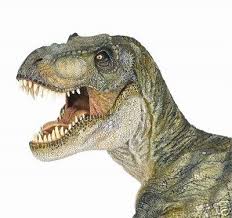
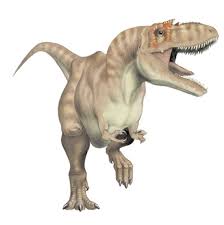
Tyrannosaurus was a theropod dinosaur that lived in Late Cretaceous Period, 67 to 65.5 million years ago. He probably saw the end of the dinosaurs' era. It belongs to Tyrannosauridae family including such dinosaurs as Tarbosaurus (mongolian cousin of T-rex), and the "Canadian Tyrannosaurus" Albertosaurus. All they have common attributes such as sall forelimbs with two claw and big skull with large teeth.
 Description
T-rex was nearly 12.4-13 metres long and weighed about 8 tonns. It was one of the biggest theropod dinosaurs such as Giganotosaurus and Spinosaurus. But, I heard that scientist excavated some individual of T-rex that was named as "Tyrannosaurus Imperator". Reffering to scientists, this individual was 20 persent longer than "Sue" - the biggest excavated Tyrannosaurus. It means that "Imperator" was nearly 15 metres! It's bigger that Giganotosaurus (14 metres).
1st weapon - Jaws
What about skull of T-rex. It was nearly 1.5 metres long and it was full of teeth sizing 15 centimetres long. It could staying under huge stress. So we can suppose that he could strike with its skull. Another interesting fact about his jaws is that he had the strongest bite among terrestrial animals. A T. rex would have been capable of biting down with a force of 35,000 to 57,000 Newtons with its back teeth, according to the study. It is nearly 5 tonns ! So T-rex could kill the prey with one bite. It's really amazing.
2nd weapon - Vision
Other evidence that is telling us about his hunting behavior. The eye-sockets of tyrannosaurs are positioned so that the eyes would point forward, giving them binocular vision slightly better than that of modern hawks. Horner also pointed out that the tyrannosaur lineage had a history of steadily improving binocular vision. It is not obvious why natural selection would have favored this long-term trend if tyrannosaurs had been pure scavengers, which would not have needed the advanced depth perception that stereoscopic vision provides. In modern animals, binocular vision is found mainly in predators.
 3rd weapon - Speed
Scientists have produced a wide range of maximum speed estimates, mostly around 11 metres per second (40 km/h; 25 mph), but a few as low as 5–11 metres per second (18–40 km/h; 11–25 mph), and a few as high as 20 metres per second (72 km/h; 45 mph). It's very fast for animal that weighed 8 tonns. he could hunt any animal that lived on his territory.
4th Weapon - Body
If we look at the skeleton of T-rex, we can understand that his body was perfectly balanced - well-placed center of gravity and big tail helped to balance the body of tyrannosaurus during the run. Tyran was powerfully built which proves us again that he was born to be the apex predator
Summing Up
Tyrannosaurus rex was the apex predator of North America during the Late Cretaceous. Having the most powerful bite of all terrestiral animal, he could kill with only one bite. Powerful building helped him to win in battle even with such monsters as Ankylosaurus and Tryceratops. Reaching the speed of 70 km/h, he could catch the fastest prey. with the binocular vision he could correctly estimate the distance to prey. All these evidences made him one of the most adapted predator of all times
Engineering Technology Reveals Eating Habits of Giant Dinosaurs
 |
| A model of the Diplodocus skull showing the distribution of stresses during biting. (Credit: Image courtesy of University of Bristol) |
High-tech technology, traditionally usually used to design racing cars and aeroplanes, has helped researchers to understand how plant-eating dinosaurs fed 150 million years ago.
A team of international researchers, led by the University of Bristol and the Natural History Museum, used CT scans and biomechanical modelling to show that Diplodocus -- one of the largest dinosaurs ever discovered -- had a skull adapted to strip leaves from tree branches.
The research is published July 16, 2012 in the natural sciences journalNaturwissenschaften.
The Diplodocus is a sauropod from the Jurassic Period and one of the longest animals to have lived on Earth, measuring over 30 metres in length and weighing around 15 tonnes.
While known to be massive herbivores, there has been great debate about exactly how they ate such large quantities of plants. The aberrant Diplodocus, with its long snout and protruding peg-like teeth restricted to the very front of its mouth, has been the centre of such controversy.
To solve the mystery, a 3D model of a complete Diplodocus skull was created using data from a CT scan. This model was then biomechanically analysed to test three feeding behaviours using finite element analysis (FEA).
FEA is widely used, from designing aeroplanes to orthopaedic implants. It revealed the various stresses and strains acting on the Diplodocus' skull during feeding to determine whether the skull or teeth would break under certain conditions.
The team that made this discovery was led by Dr Emily Rayfield of Bristol University's School of Earth Sciences and Dr Paul Barrett of The Natural History Museum in London. Dr Mark Young, a former student working at both institutions, ran the analyses during his PhD.
Dr Young said: "Sauropod dinosaurs, like Diplodocus, were so weird and different from living animals that there is no animal we can compare them with. This makes understanding their feeding ecology very difficult. That's why biomechanically modelling is so important to our understanding of long-extinct animals."
Dr Paul Barrett added: "Using these techniques, borrowed from the worlds of engineering and medicine, we can start to examine the feeding behaviour of this long-extinct animal in levels of detail which were simply impossible until recently."
Numerous hypotheses of feeding behaviour have been suggested for Diplodocus since its discovery over 130 years ago. These ranged from standard biting, combing leaves through peg-like teeth, ripping bark from trees similar to behaviour in some living deer, and even plucking shellfish from rocks.
The team found that whilst bark-stripping was perhaps unsurprisingly too stressful for the teeth, combing and raking of leaves from branches was overall no more stressful to the skull bones and teeth than standard biting.
The research is published July 16, 2012 in the natural sciences journalNaturwissenschaften.
The Diplodocus is a sauropod from the Jurassic Period and one of the longest animals to have lived on Earth, measuring over 30 metres in length and weighing around 15 tonnes.
While known to be massive herbivores, there has been great debate about exactly how they ate such large quantities of plants. The aberrant Diplodocus, with its long snout and protruding peg-like teeth restricted to the very front of its mouth, has been the centre of such controversy.
To solve the mystery, a 3D model of a complete Diplodocus skull was created using data from a CT scan. This model was then biomechanically analysed to test three feeding behaviours using finite element analysis (FEA).
FEA is widely used, from designing aeroplanes to orthopaedic implants. It revealed the various stresses and strains acting on the Diplodocus' skull during feeding to determine whether the skull or teeth would break under certain conditions.
The team that made this discovery was led by Dr Emily Rayfield of Bristol University's School of Earth Sciences and Dr Paul Barrett of The Natural History Museum in London. Dr Mark Young, a former student working at both institutions, ran the analyses during his PhD.
Dr Young said: "Sauropod dinosaurs, like Diplodocus, were so weird and different from living animals that there is no animal we can compare them with. This makes understanding their feeding ecology very difficult. That's why biomechanically modelling is so important to our understanding of long-extinct animals."
Dr Paul Barrett added: "Using these techniques, borrowed from the worlds of engineering and medicine, we can start to examine the feeding behaviour of this long-extinct animal in levels of detail which were simply impossible until recently."
Numerous hypotheses of feeding behaviour have been suggested for Diplodocus since its discovery over 130 years ago. These ranged from standard biting, combing leaves through peg-like teeth, ripping bark from trees similar to behaviour in some living deer, and even plucking shellfish from rocks.
The team found that whilst bark-stripping was perhaps unsurprisingly too stressful for the teeth, combing and raking of leaves from branches was overall no more stressful to the skull bones and teeth than standard biting.
Were Dinosaurs Destined to Be Big? Testing Cope's Rule

In the evolutionary long run, small critters tend to evolve into bigger beasts -- at least according to the idea attributed to paleontologist Edward Cope, now known as Cope's Rule. Using the latest advanced statistical modeling methods, a new test of this rule as it applies dinosaurs shows that Cope was right -- sometimes.
"For a long time, dinosaurs were thought to be the example of Cope's Rule," says Gene Hunt, curator in the Department of Paleobiology at the National Museum of Natural History (NMNH) in Washington, D.C. Other groups, particularly mammals, also provide plenty of classic examples of the rule, Hunt says.
To see if Cope's rule really applies to dinosaurs, Hunt and colleagues Richard FitzJohn of the University of British Columbia and Matthew Carrano of the NMNH used dinosaur thigh bones (aka femurs) as proxies for animal size. They then used that femur data in their statistical model to look for two things: directional trends in size over time and whether there were any detectable upper limits for body size.
"What we did then was explore how constant a rule is this Cope's Rule trend within dinosaurs," said Hunt. They looked across the "family tree" of dinosaurs and found that some groups, or clades, of dinosaurs do indeed trend larger over time, following Cope's Rule. Ceratopsids and hadrosaurs, for instance, show more increases in size than decreases over time, according to Hunt. Although birds evolved from theropod dinosaurs, the team excluded them from the study because of the evolutionary pressure birds faced to lighten up and get smaller so they could fly better.
As for the upper limits to size, the results were sometimes yes, sometimes no. The four-legged sauropods (i.e., long-necked, small-headed herbivores) and ornithopod (i.e., iguanodons, ceratopsids) clades showed no indication of upper limits to how large they could evolve. And indeed, these groups contain the largest land animals that ever lived.
Theropods, which include the famous Tyrannosaurus rex, on the other hand, did show what appears to be an upper limit on body size. This may not be particularly surprising, says Hunt, because theropods were bipedal, and there are physical limits to how massive you can get while still being able to move around on two legs.
Hunt, FitzJohn, and Carrano will be presenting the results of their study on Nov. 4, at the annual meeting of The Geological Society of America in Charlotte, North Carolina, USA.
As for why Cope's Rule works at all, that is not very well understood, says Hunt. "It does happen sometimes, but not always," he added. The traditional idea that somehow "bigger is better" because a bigger animal is less likely to be preyed upon is naïve, Hunt says. After all, even the biggest animals start out small enough to be preyed upon and spend a long, vulnerable, time getting gigantic.
Friday, November 2, 2012
News
Sorry guys. Today I hadn't time to post some articles =( But I have good news. I decided to start new series of articles in which I will tell you about the deadliest predators of the dinosaurs' era. The first article I will write tomorrow and it will be... secret =)
Thursday, November 1, 2012
The lifestyle of Spinosaurus
The lifestyle of Spinosaurus
Although Spinosaurus had been a mainstay of dinosaur books since as early as the 1970’s, the wider public were not introduced to its current form until the release of the 2001 film Jurassic Park III. In both this film and earlier depictions where is had a more 'classic' theropod skull, Spinosaurus was a predator larger and more fearsome than even a Tyrannosaurus rex, and would spend its time chasing and killing other dinosaurs like Ouranosaurus.The reality however may in fact be very different. To reveal the nature of Spinosaurus, you first need to look at the skull elements, not only the most well-known parts but it’s the skull that often gives the best indication of lifestyle for any predator. Usually theropods have relatively short and high snouts to house such body parts as biting muscles and nasal cavities so that they can hunt by scent. Spinosaurus however had a comparatively long and narrow snout like a crocodile. The tip of the snout has a recessed dip in the premaxilla which the tip of the rounded lower jaw matches and fits into. This adaptation is seen in some other animals such as crocodiles and serves to increase grip upon smaller prey, particularly slippery prey such as fish.
The teeth of Spinosaurus are neither serrated and flattened for slicing, or strongly built for crunching bone. They are however narrow, sharp and numerous like they are sometimes seen in crocodiles as well as piscivorous fish eating pterosaurs. The arrangement of the forward teeth of the upper jaw is such that the largest are on either sides of the premaxilla notch and point towards the rounded tip of the lower jaw. The teeth on this rounded lower jaw tip point upwards into the curvature of the snout notch. Oxygen isotope analysis of Spinosaurus teeth has also revealed that they were exposed to aquatic environments for long periods.
Another further special adaptation are the nostrils which are high up just in front of the eyes. This is very unusual in itself for a carnivorous animal because as an unofficial rule carnivores have their nostrils in the front of their snouts, to not only allow for scents to be more accurately analysed through a larger nasal cavity, but also to easily smell the meat that they are eating. The fact that the nostrils are so high strongly suggests that the more usual placement was not possible due to how Spinosaurus lived and behaved.
The final piece of currently available evidence is the actual construction of the snout. A 2009 study by C. Dal Sasso, S. Maganuco and A Cioffi focused upon what were small passages called foramina that lead towards the same cavity inside the snout. These are taken to have been pressure sensitive receptors that when dipped into the water revealed the motions of passing fish that created pressure waves as they swam through the water, allowing Spinosaurus to not only know when a fish was nearby, but when it would be at its closest for a strike.
All together these adaptations point to Spinosaurus being a very specialised predator that hunted for fish from the side of rivers. The long and narrow snout meant that Spinosaurus could dip its pressure sensitive nose into the water while having a large area for surface capture. The higher nostrils meant thatSpinosaurus could comfortably breathe while its snout was dipped in the water, although a possible weakness here could be a reduced nasal cavity that meant Spinosaurus could not process smells as well as other large theropods that had larger nasal cavities. Because the teeth were angled to follow the contours of their opposite jaws they would have provided the maximum amount of available grip on a slippery and struggling fish.
One of the most accurate depictions of this lifestyle was in the 2011 BBC series Planet Dinosaur, which depicted Spinosaurus as a large and specialised carnivore that primarily focused upon hunting fish like Onchopristis, yet would also supplement its diet by scavenging carrion. It should be remembered that as a meat-eater Spinosaurus would not have passed up the opportunity for a free meal, perhaps using its more massive size to intimidate smaller theropods like Rugops, or even terrestrial crocodiles likeKaprosuchus from a carcass. If active at the same time as one another then Spinosaurus may have even gone after the kills of giant crocodiles like Sarcosuchus which would have been living in the same ecosystem.
The possibility also remains that Spinosaurus may have hunted land animals, although no fossil evidence is known that strongly supports this. In South America a pterosaur bone was found with a spinosaurid tooth stuck into it, and recovery of the related Baryonyx revealed the presence of Iguanodonbones inside of the area that its gut would have been. Still these may have been cases of scavenging rather than attempted hunting. Baryonyx also revealed the partially digested remains of the fish Lepidotes, further supporting the fish specialisation hypothesis.
Because Spinosaurus disappears from the fossil record well before the end of the dinosaurs sixty-five million years ago, it must have succumbed to something else other than the established extinction theories that ended the dinosaurs once and for all. Perhaps the easiest explanation for its demise is that it simply became far too specialised, and when the ecosystem it was living in changed to be drier the rivers systems dried up, removing the prey source that Spinosaurus was best equipped to deal with. In the face of competition with more generalist theropods, Spinosaurus just could not compete with their success and was eventually driven to extinction.
Sail or hump, and more importantly why?
The key features of Spinosaurus are the high neural spines of the dorsal vertebrae that were the inspiration for the name, the largest of which of the original material was one hundred and sixty-five centimetres long. The actual construction that resulted from these spines however is one of the key subjects of debate with the two main camps being 'sail' and 'hump' (a rare third is that the spines stuck out by themselves but the majority of palaeontologists consider this very unlikely).
A sail would have given Spinosaurus an appearance similar to the famous but much olderDimetrodon. The sail itself would have been a membrane of skin and thin tissue that would have been held high off the back for maximum exposure. However the spines themselves seem incredibly strong and robust just for the purpose of supporting a skin sail, and this leads into the hump theory. A hump probably would not have been a very musculature structure but composed more of fatty tissues that may have been used for food storage as well as weighing less than the same proportionate amount of muscle.
The only thing that inspires even greater debate about whether Spinosaurus had a sail or hump is just what it was there for. Why did Spinosaurus have to be so different, not just from other theropods, but the other spinosaurids where the vertebrae are known to have much smaller neural spines. Returning to the above theory of a hump of fatty tissue would suggest that the humps primary use would be store fat whenSpinosaurus was able to gorge itself on a plentiful supply. Going with the fish specialisation, Spinosaurus's prey may have been seasonal with fish swimming upstream to spawn, but being relatively sparse throughout the rest of the year.
Spinosaurus may have stored extra food as fat so that it could continue into the leaner times of the year where prey was less frequent when it may have had to supplement its diet by scavenging. Fish would also probably not be constantly active in the same water system and Spinosaurus may have had travel quite a distance when searching for fish. This concept has also been proposed for Acrocanthosaurus, another theropod dinosaur with slightly enlarged neural spines that was active in the Aptian to Albian stages of North America. This may have been an adaptation to the climate as Suchomimus which is also from North Africa had a similar but smaller growth on its back where as Baryonyx which is known from England did not have any neural spine growth at all (all though there is speculation that the Baryonyx holotype is of a juvenile dinosaur).
Another and more controversial theory is that of thermoregulation. By pumping blood up into either the sail or hump, Spinosaurus could expose its blood to the warmth of the sun’s rays increasing its body temperature so that it could become more active. Also if too warm it may have relied upon a prevailing wind to cool its blood so that it did not overheat. The problem with this theory is that it automatically assumes that Spinosaurus was cold blooded and relied upon basking in the sun. There have been many studies done that suggest dinosaurs were potentially warm-blooded even if the exact method was not identical to mammalian methods of maintaining a warm-blooded metabolism. As a very large dinosaurSpinosaurus may have been subjected to the effects of gigantothermy where an animal is so massive that its own body insulates its internal parts from the outside cold.
An in between theory is that since Spinosaurus presumably spent a lot of time in the water waiting to strike at fish it may have been chilled by the very water it was standing in. By exposing its sail/hump to the sun it could possibly warm its blood enough to counter the waters cooling effect. However this would not explain why others like Baryonyx and Suchomimus did not do the same, unless size of the animal is a determining factor.
The most popular theory, which is a failsafe option for any unknown growth, is that the sail/hump was for the purpose of display. This would be a characteristic where the most complete, and possibly even the most colourful sail/hump was the best, and the individual it belonged to was more likely to pass on its genes to the next generation of Spinosaurus. This could in part also connect with the fat hump theory in that a well fed Spinosaurus would have a larger and fatter hump that would show others of its kind how successful a predator it was, proving that it was more worthy of reproducing.
Subscribe to:
Comments (Atom)
